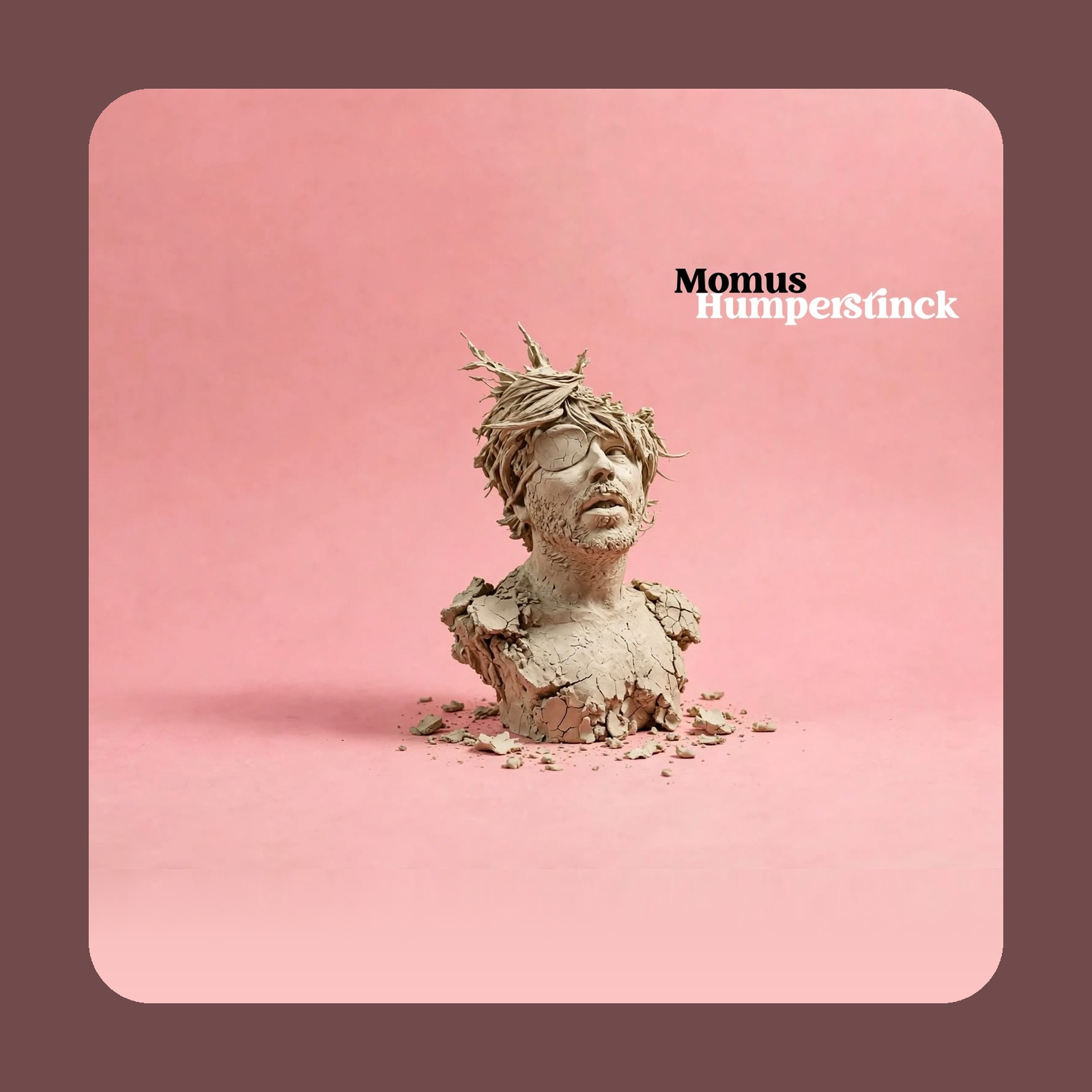
Momus has finished his new album, Humperstinck. If you want the CD, it's released on November 20th by Darla. US buyers should use this link, whereas those in the UK and EU will be able to get the record for local prices using this one. There is no vinyl release planned.
The album bristles with references to, and sonic quotations from, the work of Bowie and Eno in the late 1970s, to the tech-alienation of John Foxx, and to the Afropop of Talking Heads. There are snapshots of Kafka and Osamu Dazai, self-help songs addressed to monsters from classical mythology, Sondheim-like mixed metaphors, as well as protest songs about dating apps and people who hide behind their iPhone screens. It takes in quim-gobbling goblins, lost cats, past-it pervert Buddhas and the rings of perfectly ordinary hells before dissolving beneath the breakers.
Awarding the album 9.6 out of 10, SunBurnsOut enthused: "Humperstinck is a record of incredible richness and extreme sophistication… this style of songwriting is increasingly rare, linked to an era on the verge of vanishing—a time when writing songs was a way to pursue a form of "total art," to paint and create literature, and to draw lines connecting the past, the future, and one’s own inner self. We should cherish it while it lasts, before it disappears for good." In OutsideLeft, John Robinson said: "Momus continues to challenge our ideas of what pop music can address. It is, forever, a meaty, sensuous, erotically charged and taboo set of ideas wrapped in an approachable and glossy mask of pancake make-up and glitter. Momus’ pop, like all pop, will always be a cunt in a clown suit, and all the better and more marvellous for it."
You can support the creation of this and other albums on Bandcamp or on Patreon.


The first 2026 album from Momus was Mannequin. Recorded in Paris, Mannequin saw Momus decorating his take on the scary zeitgeist with ever-richer timbral colour. The record is available on the Momus Bandcamp page and can be ordered via Darla. The physical CD is a double digipak with an extra CD, Polnaquin, featuring fourteen Michel Polnareff covers commissioned by Robert Dye. Release date was June 26th.
"Thematically the album is about fears of artificial intelligence, the rise of fascism and how these might be echoed in the past, in the modernism of the early 20th century, through inspirations including Wire, Japanese erotic art and Kraftwerk," said John Robinson in Outsideleft. "The Scotsman is in top form," Benjamin Berton wrote in Sun Burns Out, "churning out albums that are stunning in their intelligence and pop refinement… Paradoxically, Mannequin is dark and resolutely despairing, but also an exercise in escape and divination. The miracle lies in this ability to transcend torment through naiveté, to overcome aggression through song, to annihilate evil through beauty."
Buyers in Europe can use this link or, later in June, Groovesland. You can support Momus via his Patreon.


Acktor is the second 2025 album from Momus, recorded in Berlin and Paris. You can play and buy the record on Bandcamp, and a CD edition is available to order from AmPatch, through Darla in California. The physical release is a limited edition of 300 CDs. Lyrics are here.
"The best album sung and written by David Bowie since his death," said Sun Burns Out. "Momus is 65, Bowie reached 69, a comparison of narrative structures is hopefully not predictive," added OutsideLeft.
Videos of the songs are available in this YouTube playlist, and an account of their making appears in the Open University videos in the column to your right. Just below that is a link to the photography on the Momus Tumblr, and below that again a playlist of the Versions project, in which people could commission Momus to cover a song of their choice. The Versions project is currently suspended. You can support Momus on his Patreon.


The first 2025 album from Momus, Quietism, was recorded in Paris. The predominant styles this time are "melting bossa nova" and "sinister easy listening". Paradoxically, the "quietism" proposed by the title (in fact quite descriptive of the defiantly gentle sound of 1960s Tropicalia) makes it a somewhat activist album for the dark times we may be heading into. You can check out the songs on this YouTube playlist, read the lyrics here, and help finance the album by purchasing it on Bandcamp. The record appeared in March in physical and digital formats via Darla in California. Listeners in the UK and EU should check out the Darla Ochre store for cheaper shipping and local prices on the CD.
A more general and generous way to support Momus and his work is via his Patreon.
Read a recent interview with Momus at 15 Questions.

In late July 2024 Momus released Ballyhoo, an album themed around new AI tools and K-pop. Darla has the album here, and it's on Spotify here. Song videos are on the Momus YouTube channel momasu. There's a page of lyrics and videos here.
"How could I NOT be excited to make a new kind of song at this moment," Momus wrote in a YouTube comment, "when these new tools are as transformative as sampling and sequencing were back in the 80s? Since the pop scene of Korea is my current interest, and since there's a fascinating synergy between the 'manufactured' K-groups currently dominating world pop culture and the early 80s black music I've often pastiched as Momus, this is the perfect moment. It's also the perfect moment in terms of the tech being glitchy and the results uncanny and eccentric. It will not always be this weird."
You can hear a recent interview with Momus at Leafbox. You can also support his work, and find extras, on Patreon.


The first 2024 album from Momus was called Yikes! Sixteen tracks were recorded in Paris in early spring, making this the first Parisian Momus album since 1995's The Philosophy of Momus.
French pop naturally forms a backdrop to the songwriting, with echoes of the music hall of Charles Trenet, the chanson of Leo Ferre and Jacques Brel, and Megumi Satsu's Japanese takes on Topor lyrics in the 1980s. But there are also influences from Italian cinema — a tribute to Nino Rota, a song based on Japanese TV commercials featuring Marcello Mastroianni — and from Manchester groups like The Fall and New Order. Other tracks wink in the direction of John Barry, Disney, Eddie Cantor, the Ink Spots and Morris dancing.
While many of these influences are retro, the album also reflects the concerns of 2024, with Putin menacing the West with threats of nuclear war and AI taking over people's jobs (there's even a song partly written by AI here). The album is available on Bandcamp and was released through Darla in the spring in a double CD package with the 20 Frisky Whiskies compilation of oddities and outtakes. You can preview the songs in the YouTube playlist below. Lyrics and videos are on this page.


Momus began 2024 by releasing a Bandcamp compilation of remakes, outtakes and misshapes called 20 Frisky Whiskies. A collection of twenty tracks which didn't make it onto Momus albums for various reasons, it's his first compilation since 20 Vodka Jellies in 1996. You can hear the tracks in the embedded player below.
20 Frisky Whiskies will be included as a bonus CD in the April 2024 release of Yikes!


The 2023 Momus album was Krambambuli, available from Darla. The release date was September 15th 2023. Preview the album in the YouTube playlist below. Lyrics and videos are here. Those outside the US will find it cheaper to order Momus albums from Grooves.


The second instalment in John Robinson's amusing and absorbing series of books about the songs of Momus is called Folktronics and was published on February 15th 2024. It covers the albums released between 1996 and 2008. You can order digital and paper editions here.

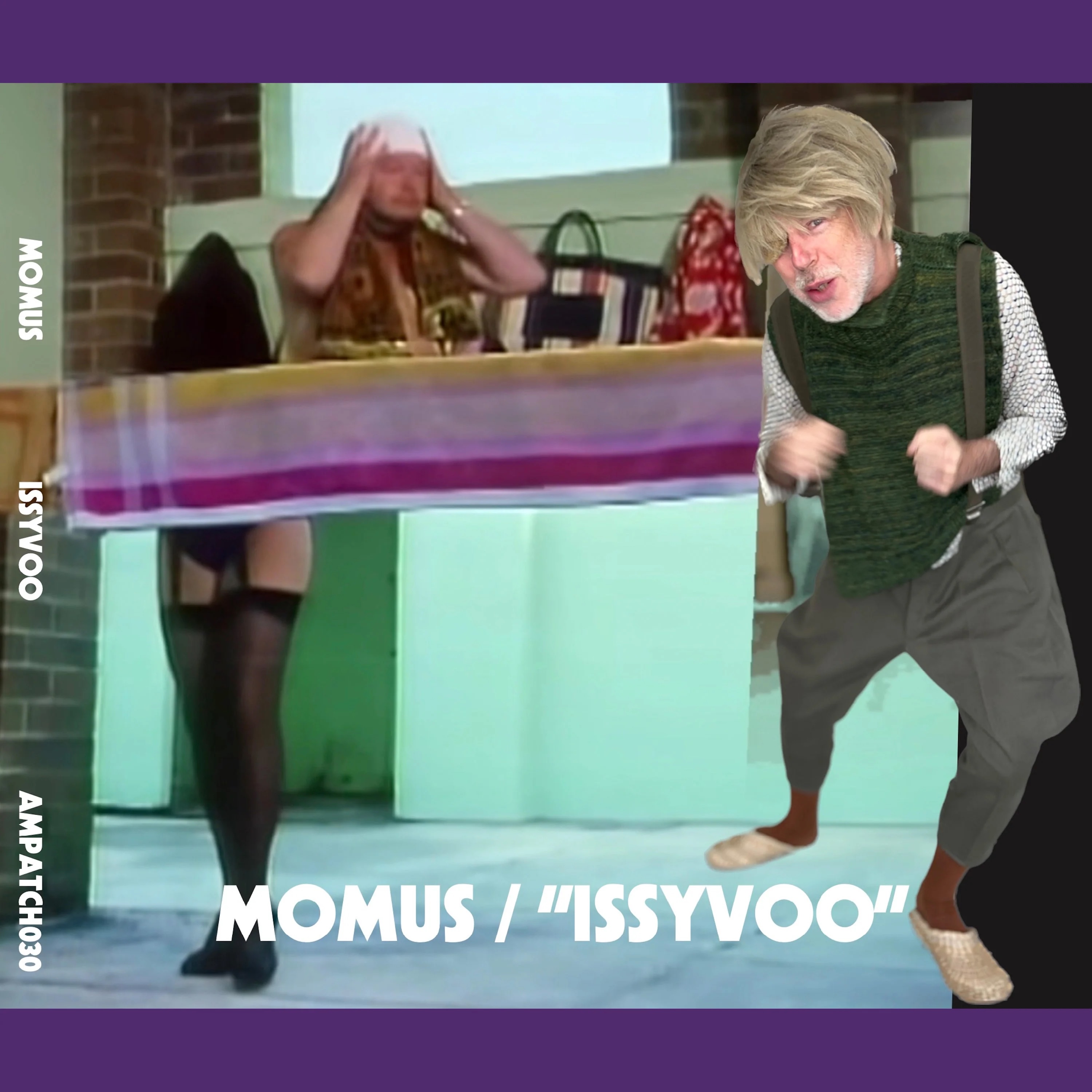
The second album made in 2022, Issyvoo, was recorded in Berlin. The record can be sampled in the Youtube playlist below and ordered here. Those outside the US might prefer to use this link for cheaper orders. Lyrics can be read here.
"There is a beauty and humanity to Momus’ lyrics in these later albums," declared the Outside Left review, "a genuine concern for the state of things identified through personal meetings, relationships and experiences. His reflections on modern concerns and obsessions are fair, balanced and show more thought than one would ever find on social media. The musical arrangements are excellent, some are blissful, some beautiful, some rambunctious."

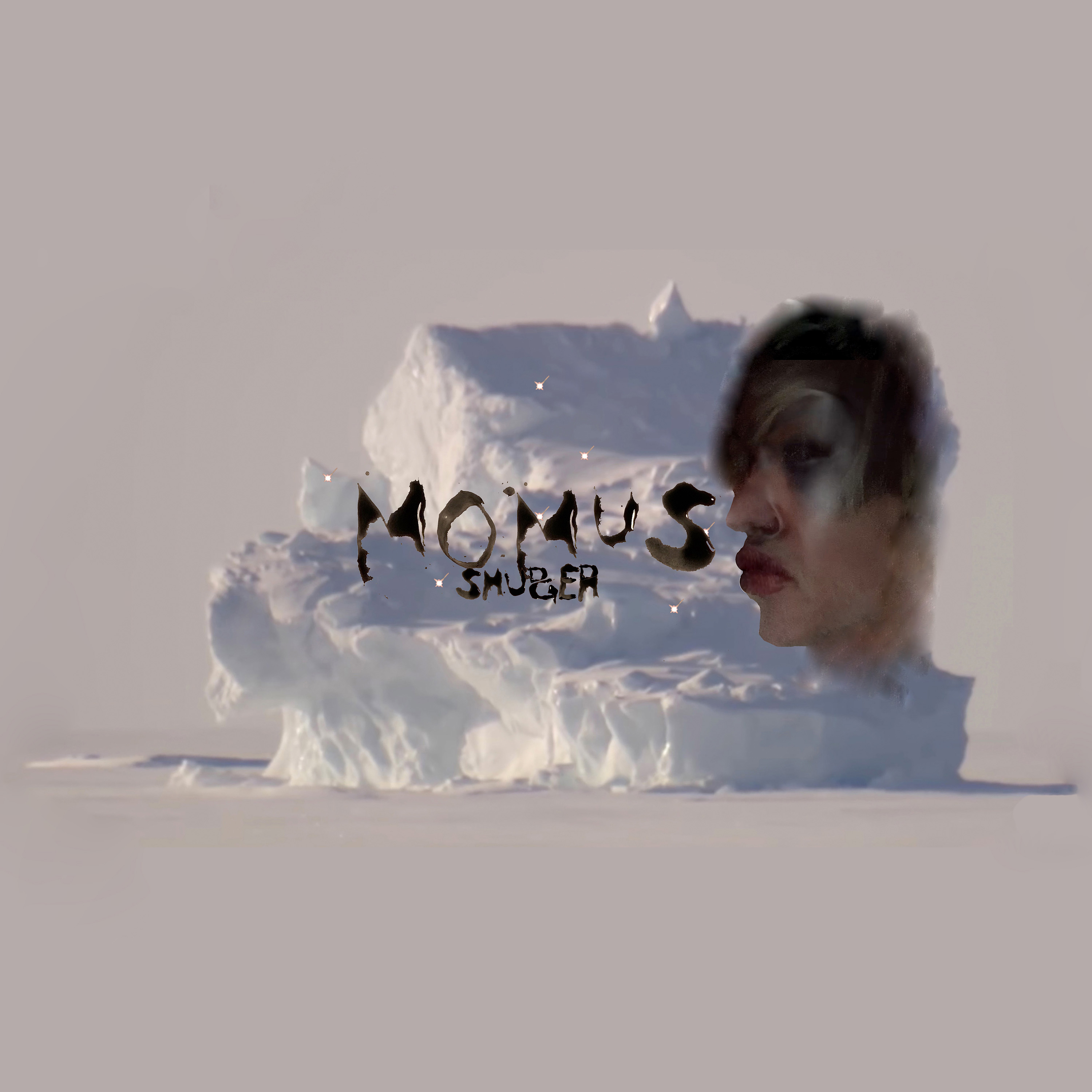
The first 2022 album from Momus was Smudger. The title refers to the act of deliberately making something blurred or dirty, and (this being Momus) also to David Bowie's album Lodger. Other cultural figures referenced range from Harry Champion to Benjamin Britten, and topics swing from insects to influencers to isolation. Lyrics are here. The record was released on April 1st. Tracks can be previewed in the YouTube playlist below.
"As wonderfully enigmatic as anything Momus has produced," wrote John Robinson, "smudging the influences of music hall, abstruse literature and philosophy, Dudley Moore, sexual politics and socio-political agendas with the memory and loss of David Bowie... As ever, one of the most under-rated and unjustly unknown songwriters operating."


During February 2021 Momus recorded his 2021 album Athenian in Athens, Greece. It's available from Darla. Those outside the US will find it cheaper to order from this link. If you like the cover, there's a T-shirt available here.
Fusing influences ranging from Benny Hill to Wyndham Lewis, and drawing as much from comedians like Frankie Howerd, Ted Ray and Marty Feldman as music heavyweights like Bowie, Cohen, Georges Moustaki and Tom Jobim, the record also contains memories of Nick Currie's childhood in Athens in the early 1970s and echoes of the Greek folk and pop music he absorbed at the time.
You can read the lyrics here.


John Robinson's ongoing Momus blog Fifteen People was published on October 29th 2021 by Zer0 Books. The first volume covers all Nick Currie's songs from 1982 to 1995 and is, according to Jacob Wren, "a deep dive into a seemingly never-ending series of brilliant works". You can preorder the book in physical and digital formats here.


In April 2020 Momus put the finishing touches to a new album, Vivid, his response to the global coronavirus pandemic. The day after the completion of the first track, Oblivion, his work was interrupted, ironically, by a mild case of COVID-19. After a week's break Momus got back to work, completing songs with titles like Working From Home and Self-Isolation. Hear and see the results in the YouTube playlist below:
Vivid was released on July 14th. "As incisive, angry and darkly funny a portrait of life in lockdown as has yet been produced," said Alexis Petridis in The Guardian. Order the album here. BBC News covered the story here. Lyrics and videos can be found on this page.
In mid-2023 Vivid was released on cassette in a limited edition from Nashville-based Utopia Unearthed Records.


Niche was a memoir in pastiche. One man’s life, six decades, 217 narrators, 105,000 words. "A grand entertainment", Kirkus Review calls it, "effortlessly blending pop culture and high culture." Publishers Weekly says: "This is that rare show-biz memoir that's both entertaining and a literary triumph." Niche was published by Farrar, Straus & Giroux on July 14th 2020.


The 2019 LP from Momus was called Akkordion. It was released on October 11th. Order it from Darla here.


The 2018 album from Momus was called Pantaloon. It was released in October. The record can be ordered here in CD and download formats. There's a page of lyrics and videos here. You can hear the songs and watch videos in this YouTube playlist:


2017's release was called Pillycock and featured a strong influence from Pasolini's Trilogy of Life films (the Arabian Nights, the Decameron, the Canterbury Tales), from the rich Elizabethan language of pamphleteer Thomas Nashe, from Jacobean revenge tragedy, from Fellini, psychedelia, snippets of guerilla music foregrounded by artists like Wael Shawky and Kader Attia, early hip-hop, and the skirl and thump of Japan's exuberant summer festivals.
You can order Pillycock from Darla, or preview the songs and videos in this YouTube playlist:
The record was released on September 20th, 2017. Lyrics and videos are here. Pillycock is also on iTunes and Spotify.


Scobberlotchers was Momus' post-Brexit record, recorded in the summer of 2016 against a backdrop of resurgent and often racist populism. Just as in the genre of the post-breakup album, there's a sense of anxiety, betrayal, and the apportioning of blame running through the record. Personal relationships are mapped to world events. You can preview Scobberlotchers (now shipping from Darla in California) with this YouTube playlist:
"References to figures as diverse as Ezra Pound, Henry Darger, Theresa May and Fernando Pessoa demonstrate Momus's propensity to tackle more subject matter in an individual album than most groups achieve in their entire discography," wrote Zachary Freeman. "With Scobberlotchers, Currie perfectly captures the growing societal chasm and secures his position as one of the last true intellectuals in pop music." Lyrics for the LP are here.

Released by Cherry Red in August 2016, Pubic Intellectual was a 3-CD, 30-year retrospective of the songs of Momus, chosen from his approximately thirty LPs by the artist himself, with a sleeve commissioned from his current designer, Hagen Verleger. A 16-page booklet contains sleevenotes written by Momus. For example:

I Was a Maoist Intellectual: When Michael Bracewell wrote his first book about music, England Is Mine, he grouped me with Green Gartside and Paddy McAloon. We were "clever pop", but the label, coming from any English person, is already a reproach. Don't you know what happens to clever people? They fail commercially, and they're ignored critically, because - especially in Britain, and especially in pop - the critically-acclaimed doesn't diverge long from what's commercial. So this song sees me making a tragedy into a farce: the intellectual becomes a hotel doorman, trying to hand out his records to the stars who pass him. It was all to come true in the 1990s, as Brett Anderson, Damon Albarn and Jarvis Cocker tipped me discreetly on their way to the upstairs suites. Admittedly, though, much worse things happened to the intellectuals under Mao. And I did, eventually, find publishers for my little red books.
Read reviews of Pubic Intellectual here, check out the lyrics here, and order the box set here.


On Glyptothek, recorded in mid-2015 in his adopted city of Osaka, Momus ransacked his colourful pile of Japanese folk 45s for samples and wrapped a series of cautionary tales for the internet age around the thunder of Shinto festival drums, the keening wail of rural flutes, the tinny riffing of massed shamisens, the clacking of summery claves, and the wild backing vocals of kimono-clad village maidens. The results sound like a Unesco World Heritage site incongruously taken over by the ghosts of Hilaire Belloc, Cocteau, Kafka, Jarry, Kantor, Petronius, DH Lawrence, Bolan and Bowie.
"Very impressive", said Frontiers magazine. "Glyptothek is at once hilarious, heartbreaking and a bit scary, but sadly, it's not likely to drag him out of obscurity."

The LP shipped via American Patchwork and streamed from various sites. Order in physical or digital formats here. Lyrics and videos can be found here.


In early 2016 Momus published Black Letts Diary 1979, a journal of his first year at Aberdeen University, in the form of a free PDF. There's a short introduction to the diary here. The first diary was followed by a 1980 journal, Somewhere there are people like me, and then by a further episode covering the eventful years 1981-1982, The Bertie Wooster of Alienation.


Popppappp was a novel published online in 2015 by experimental publishing house Fiktion. Two designers are being held hostage in Syria by a religious group formed around the lyrics of Sark E. Myth, the singer in post-punk group The Foul. To pass the time and sustain morale our cowardly heroes discuss the design history of classic products, reminisce about favourite typefaces, and debate how best to postpone their probable execution. Meanwhile the Kameraderie is erasing the mastertapes of Fleetwood Mac albums and preparing for an apocalypse heralded by the appearance of the ghastly Spider Comet and a rat regent called Nikki Danjo.


Herr F was the fourth Momus novel, available online in both English and German. Published first in 2015 by Fiktion, the novel is a take on the Faust myth and on German-language experimental fiction. In September 2019 the novel was published in German in paperback form by Edition Taberna Kritika, Switzerland.
Reviewing the novel, Berlin newspaper Taz compared Herr F to Scottish author James Hogg's Memoirs and Confessions of a Justified Sinner, and noted how the book fuses "clever melancholy, Kafka, Klee and Freud together in a fantastic melange and adds high cultural references and abstruse ideas. But behind all the scoffing defiance there wafts something dark, too, which is probably why Momus adapted this sombre German material."


Turpsycore was the 2015 album from Momus, named after Terpsichore, the ancient Greek muse of delight and dancing. Released in March of that year, the album was a triple disc set: TURPSY featured new Momus material, DYBBUK was covers of David Bowie songs, and HARVARD featured Howard Devoto covers. Preview the Momus material in this YouTube playlist:
The sleeve artwork for Turpsycore is by Hagen Verleger, the Berlin-based graphic designer. It has been nominated by the German Design Council for the 2016 German Design Award. You can order the record from Darla.


UnAmerica was Momus' 2014 satirical novel about the USA, published by Penny-Ante Editions of Los Angeles. This "picaresque sea adventure and clyster for the republic" proposes a world in which America has forfeited God's love by becoming "a machine for creating unpleasant people".
"Short, funny, and full of ideas," wrote Julian Gough in The Guardian, "UnAmerica might be the most entertaining (and readable) experimental art novel of the last few years".
"Momus has done a workmanlike job of grounding age-old utopian desires into a modern, ironic framework," wrote Maxi Kim in The Quietus . "If Momus' words are at all divinely inspired we have to take heart in the sociopolitical insight that the new age of Enlightenment will not begin from the familiar landmass we know as North America."
Dennis Sweeney wrote in Entropy: "The approach is that of a latter-day White Noise; if DeLillo inserted advertising slogans in the middle of the occasional paragraph." Henry Wessells in Endless Bookshelf said: "The terrain of UnAmerica is all too recognizably twenty-first century America: what Momus is telling us is that we are living in a world where the South Won."
Read more about UnAmerica here and order it on Amazon US or UK.

UnAmerica has also been translated into French by Marie Surgers and appeared on Serpent a Plumes in September 2015. "Bounding from one surrealistic situation to the next," said Le Monde in its review, "the author forbids himself no experiment. The result is a deliciously iconoclastic book." Magic agreed: "Often very funny and very inspired, this novel, which appears light and whacky, is much more profound than it seems. It paints a vitriolic portrait of contemporary America and its neoliberalism."


During 2013 Momus created a series of 18 one-hour radiophonic programmes for Newcastle radio station BasicFM entitled Hearspool. Mesmeric, evocative, made in the tradition of German neue hoerspiel, the programmes resumed in 2016 and can be heard on demand:
Hearspool 1: George Apollo
Hearspool 2: A Humble Gardener
Hearspool 3: Come-Along Judy
Hearspool 4: Noise Is A Monster
Hearspool 5: Fat People
Hearspool 6: The Miracle of Pie
Hearspool 7: Kakistocracy
Hearspool 8: Venice
Hearspool 9: Obsession
Hearspool 10: Adorno
Hearspool 11: My Father
Hearspool 12: A Strange Emotion
Hearspool 13: Frank
Hearspool 14: Ink and Velvet
Hearspool 15: The Great Reversal
Hearspool 16: A Hewed Man
Hearspool 17: The Overman
Hearspool 18: A Weeping Willow
Hearspool 19: Obscene Drawings
Hearspool 20: Coco Chanel
Hearspool 21: My Secret Deeds
Hearspool 22: Half-Baked Lazarus
Hearspool 23: Walkaway
Hearspool 24: Aspects of the Night
Hearspool 25: Knock Knock


Momus and ex-Orange Juice bass player David McClymont released their first collaborative album in early spring 2013 and then, at the end of the year, recorded a new record together. You can preview MomusMcClymont Two in this handy YouTube playlist.
Darla released MomusMcClymont Two in physical and digital formats. Order the record here or on iTunes and Spotify.


The 2013 long-playing release from Momus was called Bambi. It was released on October 1st and is available from Darla in physical CD and digital download formats or on Spotify.
Returning to the primal, acoustic, hot-to-tape, handmade and homemade sound of his first cassette recordings, this experimental direction saw Momus reaching for eclectic references from Eno to Afropop, styles from minimalism to wabi sabi, and inspirations from vaudevillian George Chirgwin to Swiss author Max Frisch.
"Consistently creative, inventive music that has never once lost its spark," said Rolling Stone. "Intricate, subtle stuff, which might have eternal value were it not loaded with catchphrases and tech-lingo that will render it charmingly dated in milliseconds." You can preview the album with this YouTube playlist:

MOMUSMCCLYMONT was the first album Momus made in collaboration with David McClymont, ex-Orange Juice. Momus in Osaka worked on backing tracks sent by David in Melbourne, Australia. The album (AMPATCH013) was released in February 2013 via American Patchwork / Darla. The sleeve is by Gea Philes. You can order the record here and preview the tracks via this YouTube playlist:


Sunbutler was a follow-up to Momus and Joe Howe's 2008 collaboration Joemus. Below is the Sunbutler songstream in YouTube playlist format. Physical and digital releases are now available via Darla. The lyrics are here.


In August 2012 Japanese companies Studio Warp and Nu Things teamed up to release a limited edition (300 copies) CD and DVD package entitled Momus in Samoa (Remodel 06). The audio disk contains an instrumental composition entitled Samoa Sonata, and the DVD features a visual piece called The Conductor accompanied by the sonata.


Bibliotek was the 2012 album from Momus, released by Darla. Lyrics, videos and credits for the album are on this page. You can hear a podcast discussing some of the record's themes here. You can also sample the record in the form of a YouTube playlist:


In May 2011 Momus completed his 2011 album, Thunderclown, a croony-crackly affair cooked up in close collaboration with Stockholm vinyl-charmer John Henriksson. Limited edition vinyl releases of the material are still available from John's label Tona Serenad. On July 12th 2011 Darla exclusively released the twelve-song Thunderclown album worldwide on CD and digital; order here. The the record can be sampled as a YouTube playlist:
"To say Currie's whole career has been building to Thunderclown is over-egging it," enthused Drowned In Sound, "but followers or anyone curious about his back catalogue will do somersaults when they hear what he's done here. In short, he's retched up the most blackly romantic masochism a human being can stomach and set it to a Tom & Jerry soundtrack. Henriksson's creaks and circus noises, so beautiful on his own releases, add a necessary veneer of cuteness, and make Thunderclown sound like Darren Hayman at a steam fair. The Thunderclown album is one clever little pantomime, as listenable as it is anarchic and with so much bile under its surface it's a wonder the case hasn't got ulcers."
"The naive, yet blissful sentimentality evoked from the minimal post-war era music (tape hiss, distortions and all) is offset by the clever, hyper-conscious complexities of the album's lyrical themes, creating a work that is immediately distinct and entirely original. The result is something you'd find yourself listening to alone on Christmas deliriously drunk and disillusioned, taking solace in long-vanished nostalgia... a last-minute contender for my album of the year," wrote Bigger Splashes.

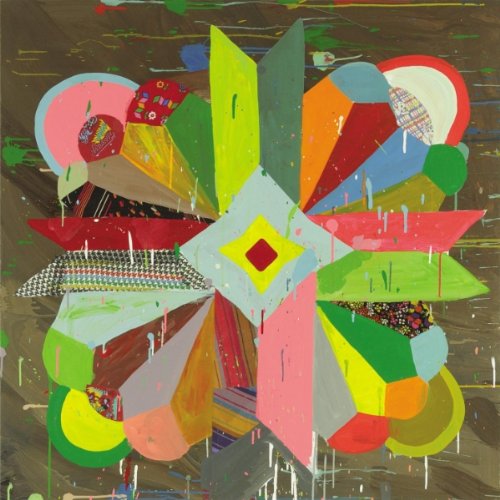
The 2010 album from Momus was Hypnoprism, released by labels American Patchwork and Analogue Baroque.
"Hypnoprism is not filled with sexual controversy," said PopMatters, "but well-crafted eclecticism where nothing seems out of place... These days, we need more artists taking chances, and Currie comes off here as the king of taking chances, in a nice, intriguingly creative package." Mojo magazine called it "oddly bloodless electropop with hints of low-budget bossa nova. But Currie's lyrics lift the proceedings onto a different level as he examines human flaws, foibles and mortality." "Typically it's the waspishly whispered words that entertain, rather than the occasionally desultory music," said the reviewer at UnCut, adding: "Nick Currie's musical career now looks like a long detour on his way to his destiny as discreetly subversive international Man Of Letters." And Mark Fisher in The Wire said: "It's a 21st century lounge music, which draws all manner of material into its studied insouciance: 1980s electronica (Sylvian & Sakamoto's 1982 masterpiece "Bamboo Music" is referenced on "Bubble Music"); post-punk (the album includes a cover of Josef K's "Adoration"); "Everything Stops For Tea"-style pre-war skit-pop (as used on "Is There Sex In Marriage?"). The highlight is "Datapanik", a sardonically tender meditation on how a computer crash now means the loss of irretrievable memory objects."
Hypnoprism features on its cover Diamond Eye, a painting by New York-based Japanese artist Misaki Kawai. Design is by James Goggin of Practise. The record can also be ordered via iTunes or as direct digital downloads from Darla, or Amazon (physical), as well as from the labels themselves.
The "hypnoprism" of the title is YouTube, a sort of hypnotic musical prism, the source of much of the inspiration for this album, and even some of the sounds. Hypnotised by watching his favourite music videos on YouTube, Momus made songs aspiring to the same qualities -- that mysterious catnip which makes you want to play a pop song over and over, and commit it to memory -- then immediately made videos for them and posted them. As a result, the whole album is available as a YouTube playlist:
There are notes on the composition of the record in the back pages of Zuihitsu, here.

 Sternberg has published The Book of Japans, Momus' new book of speculative fiction for the Solution series.
The story is simple. Twelve idiots -- possibly conspirators, possibly visionaries, possibly liars, or possibly the most privileged and valuable future-witnesses the world has ever seen -- have found a way to the future of Japan. It's a messy business, involving crawling into a calving cow, and, after the initial twelve idiotic visits, nobody has been able to reproduce the feat. A commission of enquiry is established, and the idiots duly give accounts of their voyages to a panel of Japan experts who try -- not without exasperation -- to match the extraordinarily idiotic things they're hearing with known facts, likely scenarios and extrapolated outcomes.
Sternberg has published The Book of Japans, Momus' new book of speculative fiction for the Solution series.
The story is simple. Twelve idiots -- possibly conspirators, possibly visionaries, possibly liars, or possibly the most privileged and valuable future-witnesses the world has ever seen -- have found a way to the future of Japan. It's a messy business, involving crawling into a calving cow, and, after the initial twelve idiotic visits, nobody has been able to reproduce the feat. A commission of enquiry is established, and the idiots duly give accounts of their voyages to a panel of Japan experts who try -- not without exasperation -- to match the extraordinarily idiotic things they're hearing with known facts, likely scenarios and extrapolated outcomes.
Amongst other things, the book makes a case for the rehabilitation of the idea of the "far". We live in a time when difference and distance have been eroded and eradicated by globalisation, the internet and cheap jet travel. This "book of Japans" will try to restore a sense of wonder -- along with a plethora of imagination-triggering inaccuracies, well-founded rumours, clouds of interference and globs of barn ectoplasm -- by taking the reader on a trip not just through space but time.


Published by Sternberg Press in late 2009, The Book of Scotlands was a series of delirious speculations about the future of Momus' motherland. Commissioned by German editor Ingo Niermann and modelled on his book Umbauland, The Book of Scotlands was well-received in Scotland. It is now available in a more recent edition from Luath Press, based in Edinburgh.
"I don't think I am over-stating it," wrote Gerry Hassan, "to say that The Book of Scotlands will be read and reread, studied and assessed centuries from now for what it says about early 21st century Scotland". And Pat Kane in the Scottish Review of Books said: "The Book of Scotlands is a considerate, deeply generous take on the life of this country and its possible futures."
The Book of Scotlands can be ordered online via Sternberg's website (click "order") or via Amazon.de, or Amazon UK or Amazon US,
The Book of Scotlands was one of sixteen titles shortlisted for the Scottish Arts Council's SMIT Book Awards 2010.


The Book of Jokes was Momus' first novel. Commissioned originally by french publisher La Volte, it was published first in English in September 2009, followed in October by the french edition Le Livre des Blagues, and later in Spanish as El Libro de las Bromas.
"Make no mistake," wrote Huw Nesbitt in The Quietus, "The Book of Jokes is not mere tatty pornography. Its target here is authority, not your own personal sense of decency. It is a piece of moral philosophising that takes aim at hypocrisy and fires at will with the deftness of Flann O'Brien's tongue and B.S. Johnson's imagination… After nearly three decades of languishing in relative obscurity, Momus - an artist once better known for aping Brel, Bowie and Gainsbourg - has come to the forefront and written not just one of the most entertaining books of the last twelve months, but two; the other being The Book of Scotlands."

"Most of the book's story lines orbit around taboos, including scatology, pedophilia, bestiality and talking, chess-playing penises," said the Los Angeles Times. "One of the book's central conflicts poses the question of whether two men can be each others' uncles, which can be answered only with some of the most lurid, labyrinthine incest in literature."

"The Book of Jokes is not a collection of punchlines or tension-building schemes," wrote Adam Novy in Dossier Journal, "it's a flexible and sensitive solution to the problem of how to invigorate conventions like the novel using overlooked materials. Momus is a slyly articulate stylist with a lovely flair for syntax and the lexical."
The Book of Jokes can be ordered in English via Amazon, and in French via FNAC.


The 2008 album from Momus was Joemus.
Culturedeluxe called it "the best album from Momus in years, a brilliant, hallucinatory Nintendo arcade gloop of analogue pop and retro lounge as performed by two Space Invaders posing as human beings". "A great precis of where Momus's current musical fascinations lie", wrote Prefix magazine.
A collaboration with skweee-funking Scot Joe Howe, Joemus is available in the UK and Europe from Cherry Red and in the US from Darla. Other Momus releases are listed on this page. Six albums Momus released on the Creation label are available as free downloads from ubu.com.


Pretty much from its inception, Momus has used the web to communicate. From 1995 to 2003 the Momus website entertained visitors with frequently-updated content: monthly essays, daily photos, accounts of Momus albums, some portraits of Momus, collections of podcasts, a CV, audio clips and tour diaries. Then, from January 2004 until February 2010, a LiveJournal blog called Click Opera took over, adding Web 2.0 functionality and a lively comments section.
In February 2010, for a series of reasons outlined here and here and in this radio interview, Momus completed the Click Opera project and came back to iMomus.com, bringing a touch of blog influence back to the old Web 1.0 site in the form of a new yellow notebook column called Zuihitsu. This was replaced later in 2010 by the Tumblr blog Mrs Tsk, which is relayed here on the right.
Meanwhile, news and status tweets from Momusworld can be found on BlueSky at wolon
Contact: To invite Momus to lecture, perform or sing, drop him a line at momasu@gmail.com.